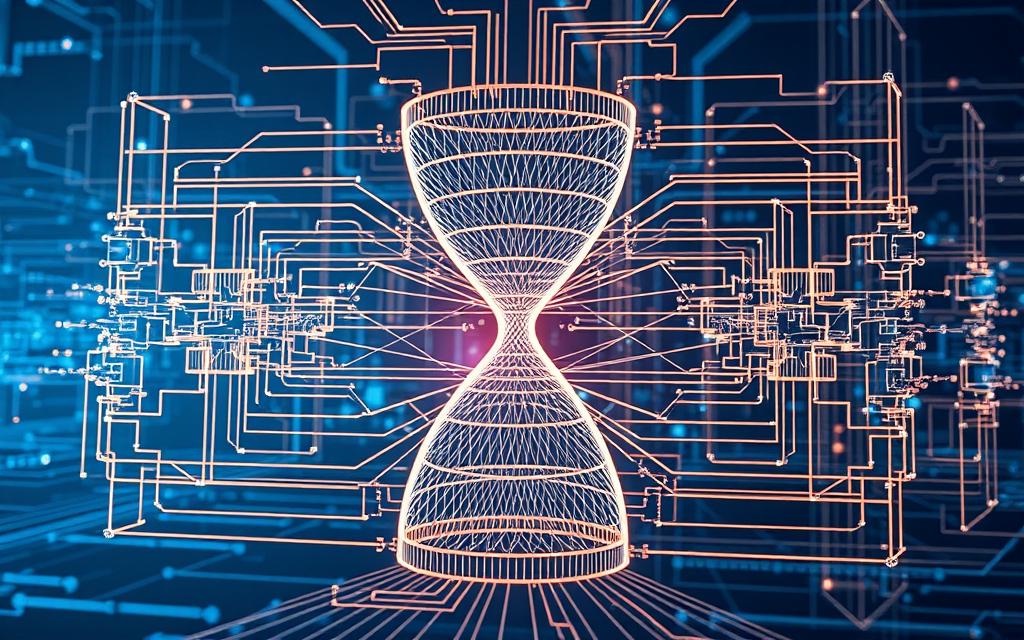

Autoencoders are a powerful type of neural network designed to compress and reconstruct data. They work by encoding input into a compact representation and then decoding it back to its original form. The same kind of architecture is also useful when you need to deploy a deep learning model in practice.
These models are widely used in machine learning for tasks like image denoising and anomaly detection. For example, they can clean up handwritten digit images by removing noise. Unlike traditional methods like PCA, autoencoders excel at capturing non-linear features in data.
By optimizing reconstruction errors through backpropagation, autoencoders ensure accurate output. Their ability to learn compressed representations makes them a valuable tool in modern AI solutions, as seen in IBM’s enterprise applications.
That broader commercial context becomes clearer when you look at ai for writing business plans and how teams apply AI in day-to-day operations.


 By
By